
CFD in Renewable Energy: Wind Turbine Aerodynamics
Blog post description.
Wiratama
3/8/20263 min read
Renewable energy technologies are becoming increasingly important as the world seeks sustainable alternatives to fossil fuels. Among these technologies, wind energy has emerged as one of the most widely used sources of renewable power. Wind turbines convert the kinetic energy of moving air into electrical energy, and their efficiency depends heavily on aerodynamic performance. Computational fluid dynamics (CFD) has become a valuable tool for studying wind turbine aerodynamics and improving the design and performance of these systems.
The aerodynamic behavior of a wind turbine is complex because rotating blades interact with turbulent atmospheric wind conditions. As wind flows across the blades, pressure differences are created that generate lift forces. These forces cause the rotor to spin and drive the generator that produces electricity. The efficiency of this process depends on how effectively the turbine blades capture energy from the wind. CFD simulations allow engineers to analyze the detailed airflow patterns around turbine blades and understand how aerodynamic forces are generated.
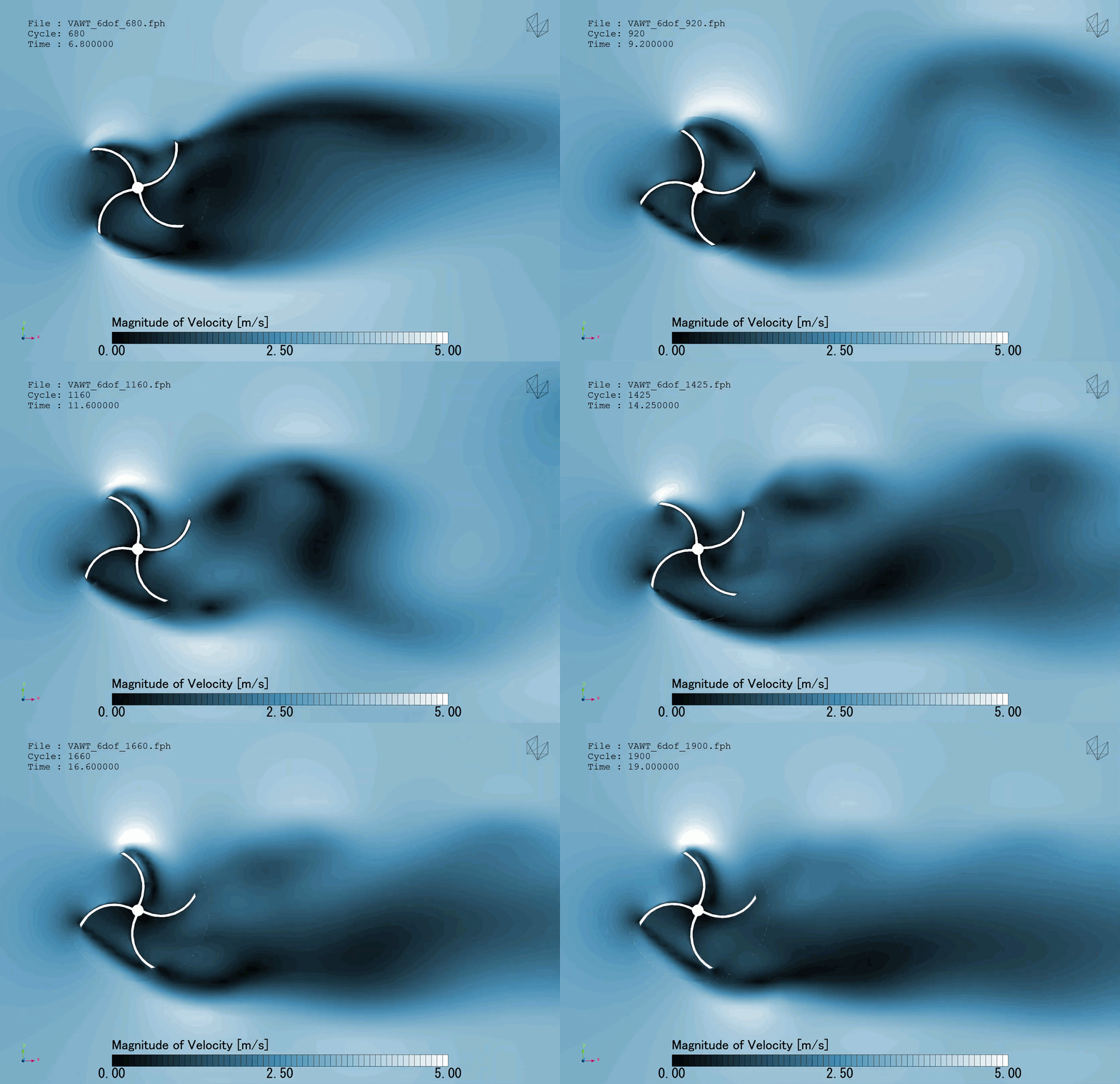
One of the main advantages of CFD in wind turbine design is the ability to visualize airflow around rotating blades. CFD models can predict velocity fields, pressure distributions, and vortex structures that develop as air flows over the blade surfaces. This information helps engineers evaluate how blade geometry influences aerodynamic performance. By adjusting parameters such as blade curvature, thickness, and twist angle, designers can improve lift generation and reduce aerodynamic drag.
CFD simulations are also useful for studying the effects of turbulence on wind turbine performance. In real environments, wind is rarely uniform. Atmospheric turbulence, terrain features, and nearby structures can cause fluctuations in wind speed and direction. These variations influence how wind interacts with turbine blades and may reduce efficiency or cause unsteady loads. CFD allows engineers to simulate these turbulent conditions and analyze how the turbine responds under different wind scenarios.
Another important application of CFD is analyzing wake behavior behind wind turbines. As wind passes through the turbine rotor, energy is extracted from the airflow, creating a wake region characterized by lower wind speed and increased turbulence. In wind farms where multiple turbines are installed, wakes from upstream turbines can influence the performance of downstream turbines. CFD simulations help engineers understand how these wake interactions occur and optimize turbine placement to maximize energy production across the entire wind farm.
CFD also plays a role in studying structural loads on wind turbine blades. Aerodynamic forces acting on the blades vary depending on wind conditions, rotor speed, and blade orientation. These forces influence structural stress and fatigue over time. CFD simulations provide detailed pressure and force distributions along the blade surfaces, allowing engineers to design blades that can withstand these loads while maintaining aerodynamic efficiency.
Another benefit of CFD is the ability to test different turbine designs in a virtual environment. Engineers can simulate various blade shapes, rotor diameters, and operating conditions without constructing physical prototypes. This allows designers to explore a wide range of design possibilities and identify configurations that deliver higher power output and improved efficiency.
Open-source CFD tools such as OpenFOAM are widely used in wind energy research and engineering. OpenFOAM provides advanced capabilities for simulating turbulent flows, rotating machinery, and atmospheric boundary layer conditions. Because OpenFOAM is open source, researchers and engineers can customize models and develop new numerical approaches for studying wind turbine aerodynamics and wind farm behavior.
CFD simulations are often used together with experimental measurements and field data. Wind tunnel experiments and full-scale turbine testing provide valuable validation for simulation models. CFD, in turn, provides detailed visualization of airflow patterns and aerodynamic interactions that may be difficult to measure directly in experiments.
Overall, CFD has become an essential tool for improving the aerodynamic performance of wind turbines. By allowing engineers to analyze airflow behavior, turbulence effects, wake interactions, and aerodynamic forces, CFD supports the development of more efficient and reliable wind energy systems. Tools such as OpenFOAM provide powerful simulation capabilities that help researchers and engineers design wind turbines capable of producing more renewable energy while reducing development costs and improving long-term performance.
cfdcourse.com
Contact
wiratama@pttensor.com
+62-821-3868-4162
© 2026. All rights reserved.